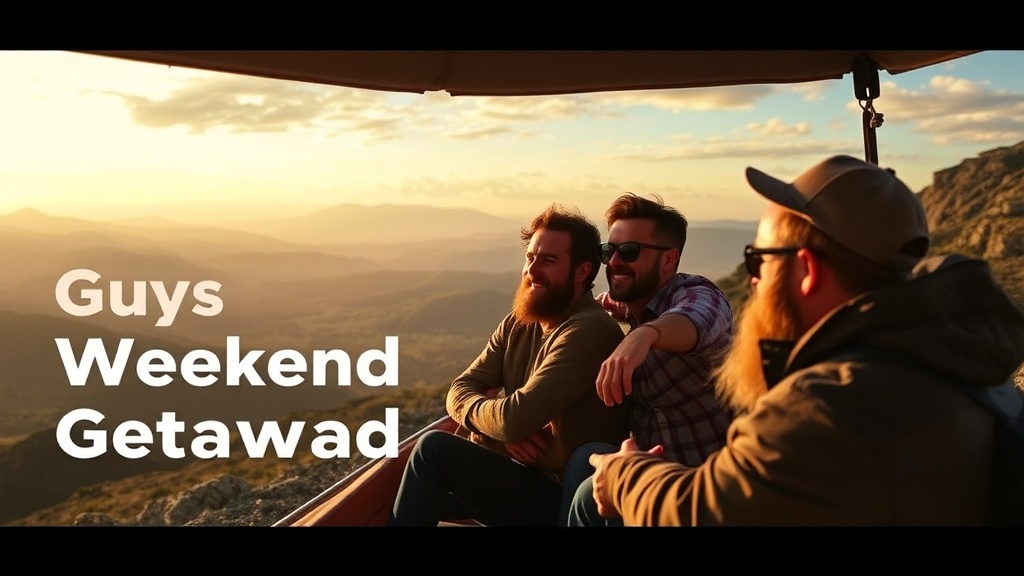
How to Plan the Perfect Guys Weekend Getaway in 2025

What Does a Perfect Guys Weekend Actually Look Like?
A perfect guys weekend balances structured activities with downtime, matches the destination to the group's energy level, and accounts for the logistics that make or break group travel. The days of winging it and hoping everyone has fun are over—thoughtful planning separates legendary weekends from the ones where half the group bails early because nobody booked dinner reservations. This guide covers destination selection, budgeting without awkward conversations, building an itinerary that keeps everyone engaged, and the gear that makes group travel smoother. Whether the crew's into fly-fishing in Montana, craft brewery hopping in Asheville, or poker nights at a lake house, the principles stay the same.
How Do You Pick a Destination Everyone Will Actually Enjoy?
The destination sets the tone for everything else, so start with a group survey—not a group chat free-for-all that spirals into forty-seven meme responses and zero decisions. Send a simple poll with three options max. Too many choices paralyze groups faster than a deer on a highway.
Consider these factors when building your shortlist:
- Travel time: Long weekends favor destinations within 3-4 hours (driving or flying). The math is simple—less transit time equals more actual weekend time.
- Group size: Six guys? Easy to coordinate. Twelve? You'll need a destination with lodging that actually accommodates large groups without forcing someone onto a pull-out couch from 1987.
- Activity alignment: If half the group wants adrenaline and the other half wants naps, pick a spot that offers both. Sedona works. A silent meditation retreat does not.
Here are three proven destination categories with specific recommendations:
The Outdoor Adventure Hub
Bend, Oregon delivers year-round options—skiing at Mt. Bachelor, fishing on the Deschutes River, and a downtown brewery density that defies logic. For summer trips, the Boundary Waters in Minnesota offers canoe camping without the crowds of Boundary Waters' flashier cousins.
The City Experience
Nashville gets the hype, but Chattanooga punches above its weight—climbing at High Point, whiskey at Chattanooga Whiskey, and a food scene that surprised everyone who still thinks Tennessee only does barbecue. Austin works for bigger budgets; Chattanooga keeps everyone happy for less.
The Low-Key Escape
Lake houses in Michigan's Harbor Country or the Poconos in Pennsylvania require minimal planning once you're there. The activities—bonfires, boat rentals, card games—practically run themselves. That said, "low-key" doesn't mean "no plan." Someone still needs to bring the firewood and check that the rental actually has the kayaks listed in the photos.
What's the Least Awkward Way to Handle Money?
Money ruins more guy trips than bad weather or food poisoning. The solution isn't complicated—it's just uncomfortable to bring up. Address it directly, early, and with systems that remove the mental math.
Here's the framework that works:
- Set the budget range upfront. Before anyone commits, communicate the all-in cost per person including lodging, shared meals, activities, and a contingency fund. "Around $400-500" beats silence followed by sticker shock.
- Use a shared payment app. Splitwise tracks group expenses without the "you owe me $23.50" text messages. Venmo works for simpler trips; Splitwise shines when you're splitting groceries, gas, and that one dinner where three guys ordered steaks and two ordered salads.
- Designate one "finance person." Not the same as the trip planner—this person handles collecting money for shared expenses, booking refundable rates when possible, and keeping a running tally. Rotating this role prevents resentment.
- Build in a buffer. Add 15% to your estimated budget. The group will use it—unexpected cover charges, the "let's just get another round" moment, or replacing the cooler someone forgot to close.
The catch? Someone always spends more than others. The guy who orders top-shelf everything and insists on Uber Black. Handle this by agreeing on shared expense norms beforehand—house whiskey is fine; if you want the 18-year single malt, that's on your personal tab.
How Far in Advance Should You Actually Plan?
Four to six weeks minimum for domestic trips, three to four months for peak-season destinations or international weekends. The planning timeline breaks down into phases, and skipping any of them creates the chaos that turns weekends into logistical nightmares.
| Timeline | Action Items | Owner |
|---|---|---|
| 8-12 weeks out | Confirm dates, survey group on destination/activity preferences, set budget range | Trip Organizer |
| 6-8 weeks out | Book lodging (largest expense—secure this first), reserve any required permits or guided activities | Trip Organizer |
| 4-6 weeks out | Confirm final headcount, collect deposits, book transportation (flights or rental vehicles) | Finance Person |
| 2-4 weeks out | Create shared itinerary document, assign meal responsibilities, confirm reservations | Trip Organizer |
| 1 week out | Share packing list, confirm check-in details, settle final balances | Both |
| Day before | Group text with departure times, emergency contacts, and that one house rule about not using the good towels | Trip Organizer |
Worth noting: the "owner" column matters. Unassigned tasks don't get done—it's the project management principle of RACI (Responsible, Accountable, Consulted, Informed) applied to weekend trips. Someone books the Airbnb. Someone else plans Saturday dinner. If everyone owns everything, nobody owns anything.
What Gear Actually Makes Group Travel Easier?
You don't need to overpack, but showing up with the right equipment prevents the small irritations that compound across a weekend. Think in categories: food/drink, entertainment, and logistics.
The Cooking Setup
One quality portable grill beats three cheap ones. The Weber Spirit II E-310 works for cabin rentals with deck space; the Weber Q 1200 fits in a car trunk for camping trips. Bring a meat thermometer—nobody wants to be the guy who served questionable chicken. A large Yeti Tundra 65 cooler keeps drinks cold for three days; the cheaper options fail exactly when you need them most.
The Entertainment Kit
Playing cards (two decks minimum—someone always drops one in the lake), a portable speaker that actually holds a charge (the JBL Flip 6 survives poolside abuse), and one analog game that works without phone batteries. Cornhole sets are cheap, portable, and create natural tournament brackets that fill Saturday afternoons.
The Logistics Bag
Power strips (old rentals never have enough outlets), a basic first aid kit with blister pads and antacids, and a laminated sheet with emergency contacts, addresses, and confirmation numbers. It sounds excessive until you're in a cabin with no cell service and need the Wi-Fi password written down somewhere.
How Do You Build an Itinerary That Doesn't Feel Like Boot Camp?
The perfect schedule has structure without rigidity—enough planned to prevent the "what do we do now?" lull, enough flexibility for spontaneous decisions. Here's the thing about group dynamics: guys want to feel like they're choosing their fun, not being herded.
Structure each day around one anchor activity—the non-negotiable thing you planned the trip around. Everything else is optional padding. Saturday might look like:
- 8:00 AM: Coffee and breakfast (casual—whoever wakes up)
- 10:00 AM: Anchor activity—guided fly-fishing trip, golf tee time, brewery tour
- 1:00 PM: Lunch (planned location, flexible timing)
- 3:00 PM: Open block—naps, exploring, or that card game that started yesterday
- 6:00 PM: Group dinner (reservation made three weeks ago)
- 8:00 PM: Evening activity—fire pit, poker, or checking out that bar the locals recommended
Notice what's missing: back-to-back scheduled blocks. Notice what's present: a dinner reservation, because twelve guys walking into a restaurant without one is how you end up eating gas station taquitos at 10 PM.
Build in solo time, too. Not everyone wants to fish. Not everyone wants to shop. The "go do your thing, meet back at 6" approach respects different energy levels and prevents the resentment that builds when one person's dragged through activities they hate.
What About the "Disaster" Scenarios?
Stuff goes wrong. The rental car gets a flat. Someone's luggage doesn't arrive. The weather turns biblical. The difference between a ruined weekend and a funny story later is contingency planning.
Assign a "backup planner"—someone who researches alternative indoor activities if the outdoor ones get rained out. Keep a shared digital folder (Google Drive, Dropbox) with reservation confirmations, emergency contacts, and copies of IDs. Know where the nearest urgent care is. Pack a real first aid kit, not the Band-Aid collection from your glove compartment.
Most importantly: build in margin. If everything runs late, if someone sleeps through the morning activity, if the restaurant loses your reservation—having unstructured buffer time absorbs the shock without cascading into full schedule collapse.
How Do You Actually Get Everyone to Commit?
The hardest part isn't planning the trip—it's getting definitive yes/no answers from guys who treat commitment like a venereal disease. The solution is reducing friction and adding accountability.
Send the proposal with three specific pieces of information: dates, estimated cost, and the one-sentence pitch ("Asheville for breweries and hiking, October 14-16, around $450 all-in"). Request a response within 48 hours—not to be demanding, but because "let me check my calendar" usually means "I'm waiting to see if something better comes up."
Require a deposit to secure the spot. Even $100 changes psychology—sunk cost is real, and people honor commitments they've paid for. The deposit goes toward the final balance; it's not extra money, just early money.
Once you hit minimum viable group size (usually four guys for most destinations), book the non-refundable stuff. Momentum matters. The group will fill out; the lodging won't get cheaper.
"The best trips aren't the most expensive ones. They're the ones where everyone actually shows up, nobody's stressed about money, and the logistics fade into the background so the actual hanging out can happen."
Planning a guys weekend isn't about controlling every variable—it's about controlling the variables that matter so the uncontrollable ones (the conversation, the memories, the stories you'll retell for years) have room to breathe. Start with the survey. Lock in the lodging. Collect the deposits. The rest is just details.