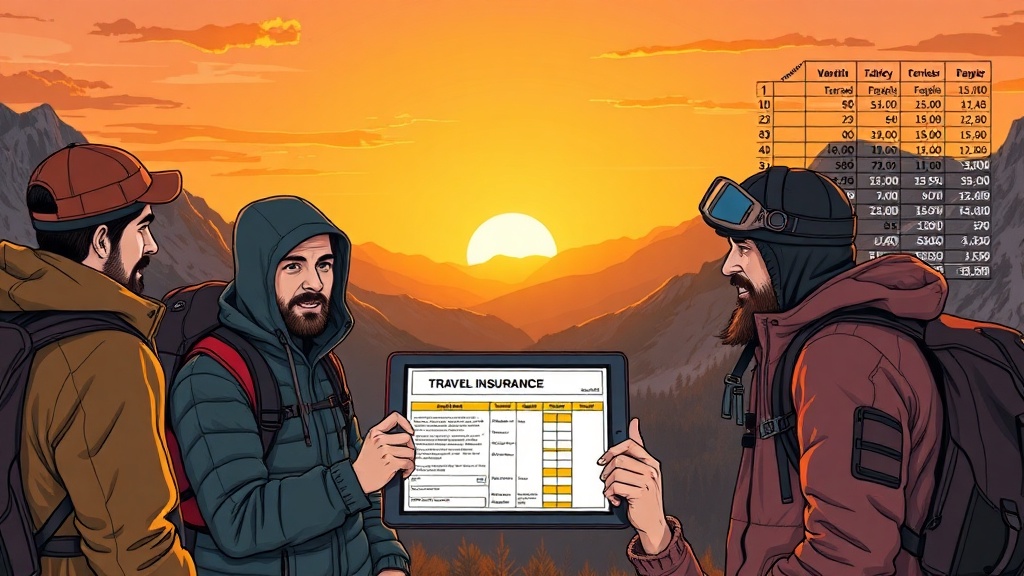
Group Trip Insurance Guide: Protect Your Adventure & Wallet

Group Trip Insurance Guide: Protect Your Adventure & Wallet
Published on March 28, 2026
Hook: Ever booked a dream group getaway, only to watch it crumble because of a sudden injury, cancellation, or unexpected storm?
Why insurance matters for every planner
When you’re the “Architect” of a group trip, the last thing you want is a surprise that wipes out weeks of spreadsheets, negotiations, and camaraderie. A solid insurance plan is the safety net that keeps the itinerary intact, the budget on track, and the friendships intact—especially when you’re coordinating multiple friends, gear, and cash flow.
What types of coverage should you consider for a group adventure?
- Trip Cancellation & Interruption – protects the prepaid deposits you’ve already secured (remember the Group Trip Deposit Playbook? Insurance can cover those if a participant backs out last minute).
- Medical & Evacuation – essential for rugged destinations where local medical facilities are sparse.
- Gear & Personal Belongings – especially relevant for our Gear Lab focus on high‑quality socks, backpacks, and tech.
- Liability & Accident – covers you if someone in the group gets injured on a trail or at a rental cabin.
How much coverage is enough for a typical group of 6‑12 friends?
- Calculate total prepaid costs – add deposits, transportation, lodging, and any non‑refundable fees.
- Multiply by 1.5‑2× – that gives a comfortable ceiling for cancellation coverage.
- Medical limits – aim for at least $100,000 per person for emergency evacuation; many policies cap at $250,000, which is ideal for remote hikes.
Pro tip: Use the Master Itinerary Spreadsheet to pull all cost figures into one cell, then plug that number into the insurance calculator. (See our Master Itinerary Spreadsheet for a ready‑made template.)
Which providers deliver the best value for group trips?
| Provider | Coverage Highlights | Avg. Cost (per person) | Why It Works for Groups |
|---|---|---|---|
| World Nomads | Flexible “any adventure” clause, 24/7 assistance | $45‑$65 | No minimum trip length, great for multi‑day hikes |
| Allianz Travel | Strong cancellation protection, easy claims portal | $40‑$55 | Tiered plans let you add “gear coverage” as an add‑on |
| InsureMyTrip (aggregator) | Compare 30+ carriers, instant quotes | $35‑$70 | Lets you bundle several policies for a large crew |
Common mistake: Picking the cheapest plan and discovering it excludes “extreme sports” after you’ve booked a white‑water rafting day. Always double‑check the activity exclusions.
How to buy insurance without breaking the group’s cash flow
- Collect payments early – use the same Payment Apps Showdown you trusted for the deposit (Payment Apps Showdown).
- Create a shared “Insurance Fund” column in your master spreadsheet.
- Buy the policy once the fund hits 100 % – this avoids double‑charging anyone and keeps the paperwork transparent.
What documents should you keep on hand during the trip?
- Policy number & insurer contact – printed and saved on each phone.
- Proof of purchase receipts – for gear, lodging, and transportation.
- Medical info – allergies, pre‑existing conditions, and emergency contacts.
Store everything in a shared Google Drive folder titled “Trip Insurance” and link it in the itinerary’s “Resources” tab.
Quick checklist: Is your group trip fully insured?
- All participants have signed the insurance waiver.
- Coverage limits meet the “1.5× total cost” rule.
- Activity exclusions are reviewed and approved.
- Emergency contact list is uploaded to the shared folder.
- Policy documents are backed up locally and in the cloud.
Takeaway
Insurance isn’t an optional extra—it’s the final piece of your “Master Itinerary” puzzle. Treat it like the “bedrock” of your budget: negotiate it early, document it clearly, and verify it before you hit the road. With the right coverage, you’ll spend less time worrying and more time enjoying the high‑low adventure you’ve meticulously planned.